The only star in the Solar System. It makes gravitational force to other planets. Effective on life and climate on Earth. It emits radiation along with heat and light to its surroundings. Its orbit is around the Milky Way Galaxy. Sun is the closest planet to Earth. The surface temperature of the sun is 5500 degrees. The sun is brighter than most other stars in the galaxy.
Mercury:
It is the closest and smallest planet to the sun. The planet has the longest orbital period around the sun. It has no known natural satellites. It takes its name from the Roman god, the messenger of the gods. There has not been geological activity on it for billions of years. It is one of the 4 rocky planets in the solar system Its atmosphere always regenarete. It has no magnetic field because it has a very small core.
Venus:
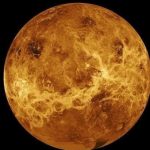
Venus is the hottest planet of all, so its like a hell. It is similar to Earth but Venus’ pressure is higher than Earth. It is brighter than all its other stars and planets and is the brightest object in the sky after the sun and moon. There is continuous acid rain in the atmosphere of Venus.
Earth:
It is the only planet known to have life and water on it. Life on Earth began about four billion years ago. Meteorites crashing into Earth formed oceans. It is the third closest rocky planet to the sun.
Mars:
Its name is Red Planet because it looks red, similar to Earth. It is believed that there used to be water in it. It is the fourth closest rocky planet to the Sun. It has two small satellites. Mars is half the size of Earth. Mars is heavier than Mercury because Mercury’s gravity is more than Mars. 4 billion years ago Mars had a magnetic field. There are traces of meteorites on its surface. There are glaciers at the poles of the planet.
Jupiter:
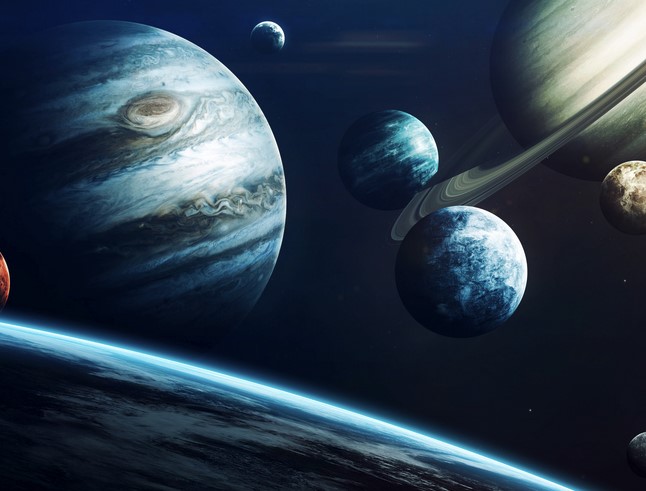
The biggest planet in the Solar System. Its name means the biggest God. It is the first gas giant. It contains mostly helium and hydrogen. The gravitational force is so great that it has protected us against meteorites for years. There’s a storm on its surface that’s been going on for 500 years, and its name is Big Red Spot. Jupiter has rings like Saturn, but is very small dust particles.
Saturn:
Saturn is the second biggest planet. It has 56 satellites. Saturn have big rings. Its atmosphere is hydrogen gas.The rings cover the area between 67,000 km and 480,000 km from the center of the planet in the equatorial plane. Its magnetic field was created by solar winds. Rain only falls in the form of methane showers once a thousand years.
Uranus:
The meaning of its name is God of the sky. Solar winds had less effect on lighter elements further away from the centre. These light elements formed the gas giant Uranus and other gas giants. Uranus is covered with ice. It’s bigger than the Earth.
Neptun:
It is the farthest planet from the Sun and does not have a solid surface. The meaning of its name is Sea of the God. Methane gas gives the planet a blue image. It has very thin and segmented rings. It is the coldest planet in the solar system.
Elifnaz GÜÇLÜ
SINAV COLLEGE KARŞIYAKA CAMPUS
9B